Storm-Damaged Trees: 5 Essential Tips to Spot Danger Before It Gets Worse
Storms in Tulsa, Oklahoma, can leave trees looking mostly fine at first glance, even though serious damage may be hiding below the surface.
High winds, heavy rain, and saturated soil can weaken a tree’s structure without causing immediate failure. Knowing how to spot the warning signs early helps you protect your home, your family, and your property before the situation gets worse.
This guide explains how to tell if a tree is dangerous after a storm and what signs should never be ignored by Tulsa homeowners.
Key Summary:
Storm-damaged trees can become dangerous if they start leaning, lose large limbs, or show cracks in the trunk. Exposed roots, hanging branches, or fresh splits are clear signs a tree may fall. If you notice any of these issues, it is best to call a professional tree service in Tulsa, Oklahoma for a proper assessment.
Why Storm-Damaged Trees Can Be More Dangerous Than They Look
Storm damage is not always obvious right away. In Tulsa, we often see post-storm failures days or months later, once wet soil begins to dry and shift. Trees that survived the initial wind event can fail later under much lighter conditions.
Oklahoma storms often combine strong winds with heavy rain, which loosens soil around tree roots. Even when a tree looks stable, its anchoring system may already be weakened, especially in Tulsa’s clay soils, increasing the risk of delayed failure at a later time.
Dangerous tree failures can happen after the weather clears. Branches can drop without warning, and trunks can split under normal wind conditions. That is why early inspection is important after any major storm.
5 Essential Tips to Spot Storm-Damaged Tree Danger
If your property was hit by recent storms, these signs can help you decide whether a storm-damaged tree may be a hazard.
-
The Tree Is Leaning or Newly Tilted
A sudden lean after a storm is one of the clearest signs a tree may fall. Trees that were previously straight but now tilt often show signs of root movement or soil displacement, which we commonly see after heavy rain in Tulsa. In Tulsa, saturated ground and compacted clay soil make leaning trees especially unstable, even if the lean appears slight at first.
-
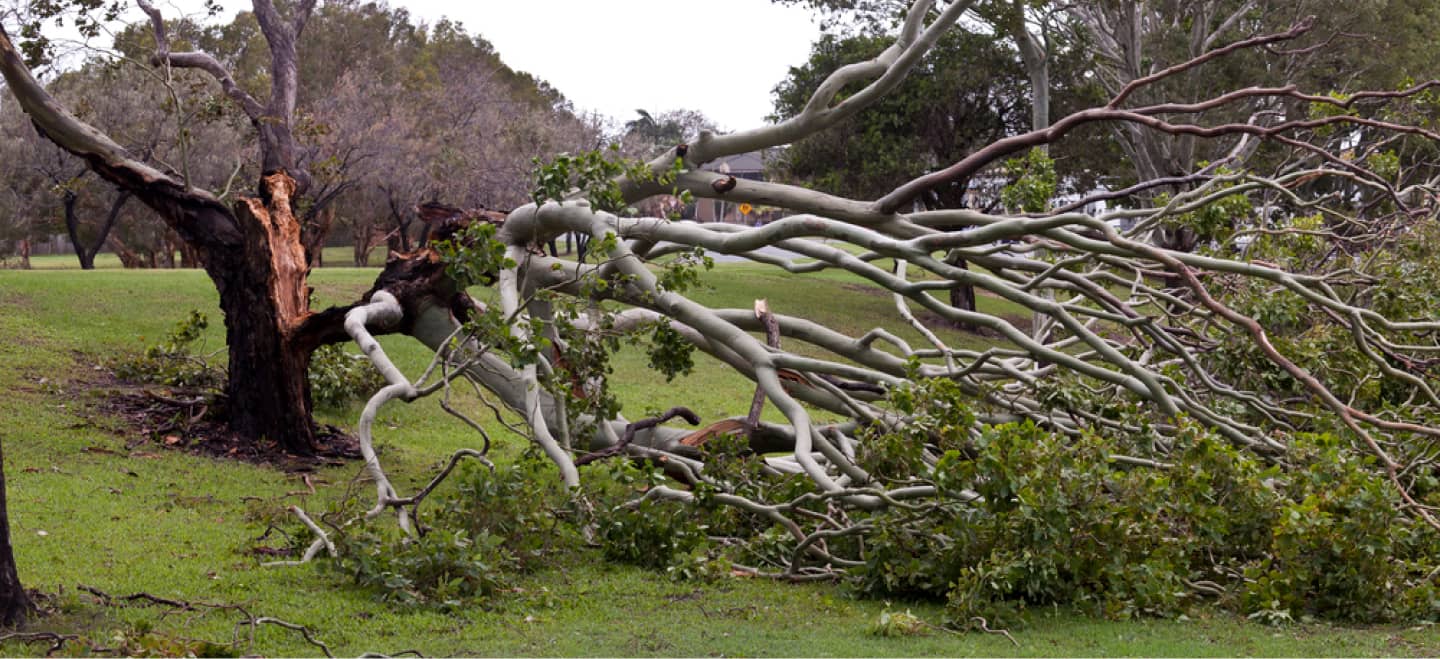
Large Branches Have Snapped or Are Hanging
Broken or hanging limbs are an immediate danger. Even if they are still attached, damaged branches can fall at any time due to gravity or light wind. This is a common warning sign when figuring out how to tell if a tree is dangerous after a storm.
-
Visible Cracks in the Trunk or Major Limbs
Cracks in the trunk or large branches may indicate structural weakness. These splits may widen over time and lead to sudden failure. A cracked tree trunk may be a serious sign that the tree’s strength has been compromised.
-
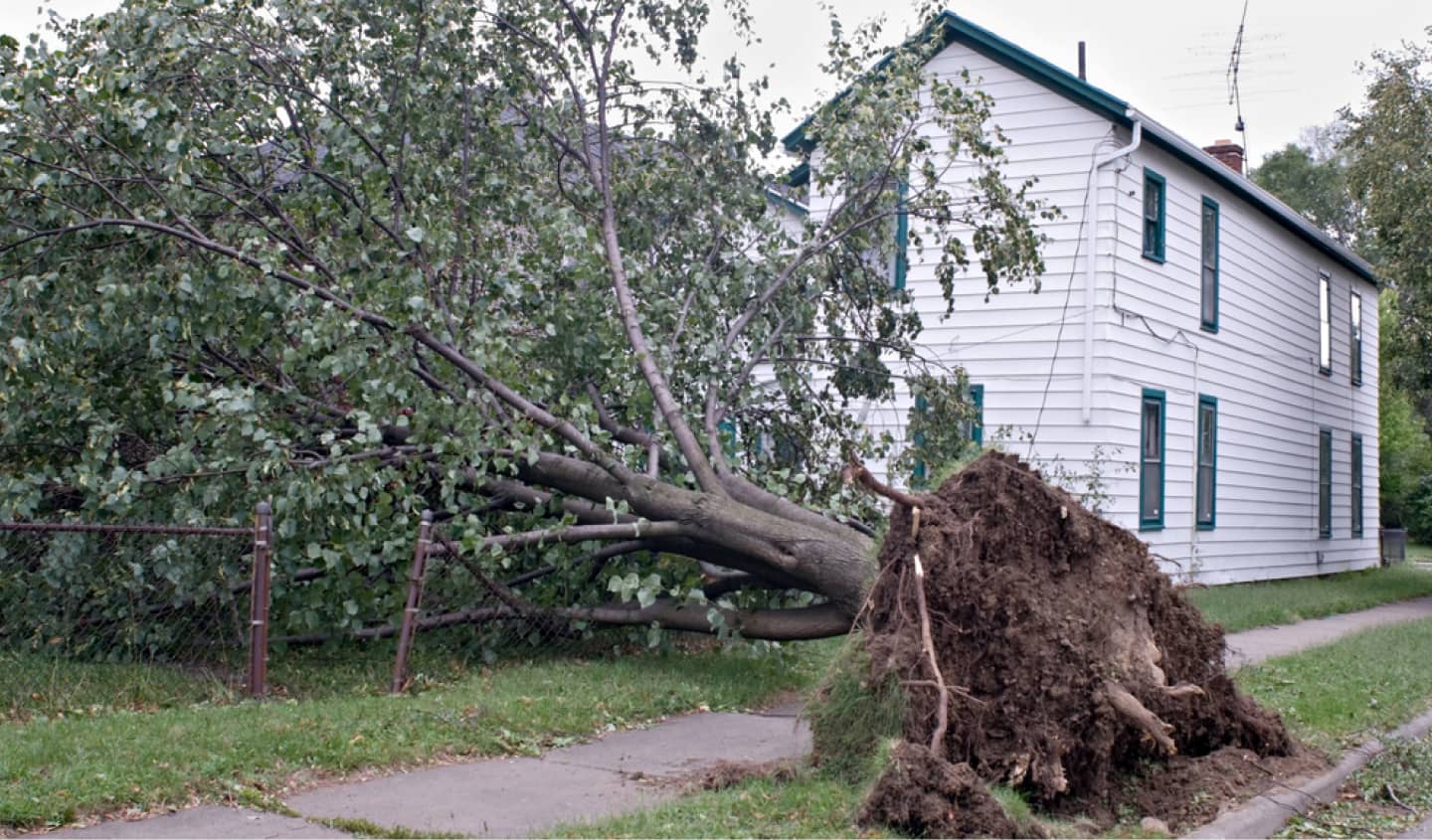
Roots Are Uplifted or Exposed
Exposed or lifted roots suggest the tree has lost stability. During heavy rain, soil can wash out on one side of the root ball, a pattern we often see in Tulsa yards with slopes or poor drainage. This is one of the most common signs a tree may fall in Tulsa after strong storms.
-
Fresh Splits or Bark Peeling After the Storm
Fresh splits or peeling bark can signal internal damage. Bark protects the tree’s vital systems, and when it separates, decay and weakening can follow. This type of storm-damaged tree may become unsafe over time if left unchecked.
Can a Storm-Damaged Tree Be Saved?
A storm-damaged tree may be saved if the damage is minor and addressed early. Light pruning, cabling, or stabilization may help restore safety when the trunk is intact and the root system is still strong.
Trees with small broken limbs, limited canopy damage, or slight movement may recover with proper care. A professional assessment helps determine whether trimming or support will reduce risk without harming the tree’s long-term health.
However, removal is often the safer option when the tree has major cracks, severe leaning, or root failure. If the structure is compromised, keeping the tree standing puts your home and family at risk. In these situations, professional tree removal in Tulsa is the safest solution.

Why You Should Not Wait to Address Storm-Damaged Trees
Storm damaged trees often get worse over time, even if the tree looks stable at first. Delayed failures are common in Tulsa after strong winds and heavy rain, especially once the soil dries and shifts again.
Waiting increases the risk of sudden limb drop or total tree failure, which can cause serious property damage or injury.
Common risks of waiting include:
- Branches falling days or weeks later without warning
- Trees failing during lighter winds after the storm
- Damage to roofs, vehicles, fences, or power lines
Acting early helps reduce risk and prevents small problems from becoming emergencies.
When to Call a Certified Arborist in Tulsa
You should call a certified arborist if you are unsure whether a storm-damaged tree is safe. Arborists are trained to assess structural stability, root movement, and hidden stress points that are not visible from the ground.
If your tree is leaning, cracked, dropping large limbs, or showing exposed roots, professional evaluation is important. These are clear signs that the tree may fall or continue to deteriorate.
A local Tulsa arborist understands how Oklahoma storms, saturated soil, and delayed drying affect tree stability across Tulsa properties. Getting expert advice early can help you decide whether a tree can be saved or needs to be removed for safety.

What TREES BY JAKE Can Do to Help
At TREES BY JAKE, we provide trusted, local help for storm-damaged trees throughout Tulsa and nearby areas. We focus on safety, clear communication, and fast response after severe weather so homeowners know exactly what to expect.
We can help with:
-
Storm damage inspections to identify hidden risks, structural issues, and signs a tree may fall
-
Emergency tree services when limbs or trees pose an immediate danger to your home or property
-
Tree removal and cleanup for storm-damaged trees that cannot be safely saved
-
Honest, professional recommendations based on real conditions, not guesswork
If your tree was damaged in a recent storm, a prompt assessment from our team can help you avoid bigger problems and restore peace of mind.
FAQs
-
How do I know if my tree is dangerous after a storm?
A tree may be dangerous if it is leaning, has cracked limbs or trunk, exposed roots, or hanging branches. These are common signs that a tree may fall after storm damage. A professional inspection is the safest way to confirm the risk.
-
Can a storm-damaged tree be saved or pruned?
Some storm-damaged trees may be maintained if the damage is limited to small limbs and the structure is still strong. Pruning or stabilization may help, but severe leaning, trunk cracks, or root damage often require removal.
-
Is it safe to leave a damaged tree standing?
Leaving a damaged tree standing is risky, even if it looks stable at first. Damage can worsen over time, and branches or the entire tree may fail without warning.
-
Will insurance pay for tree removal after a storm in Tulsa?
Insurance coverage varies, but many policies cover tree removal if the tree has fallen onto a covered structure. It is important to document the damage and contact your insurance provider as soon as possible.
Prevent Storm-Damage Trees From Becoming a Bigger Risk
Storm-damaged trees can look stable while hiding serious risks below the surface. Leaning trunks, cracked limbs, exposed roots, and hanging branches are all signs that should not be ignored. Acting early helps prevent property damage, injuries, and costly emergencies.
If your tree was damaged in a recent storm, do not wait for the problem to escalate. Contact TREES BY JAKE in Tulsa for a free estimate and expert assessment. Our team is ready to help you protect your home and restore safety with clear, honest guidance you can trust.
Contact Your
Tulsa Tree Service
TREES BY JAKE has been providing tree removal services in Tulsa for over a decade. Jake is a Tulsa Certified Arborist and we have a variety of equipment to safely and efficiently remove trees. Call or text us today for your free estimate at 918-500-9955 and don’t forget to check us out on Facebook, Instagram, and Twitter!
Contact us